Latest update: 27 March 2025 - 5 min read
Paying benefit in kind (BiK) on your company car
If you currently use a company car as a work benefit, you are liable to pay tax on it. Company car tax or benefit in kind (BiK) car tax is paid by employees who are given a company car for personal use, including commuting. This is often through the use of a company car, but it can also be a personal or leased car that is paid for by your employer.
How is BiK calculated
Benefit in kind car tax is calculated based on 3 variables:
- P11D value of the car - the list price of your vehicle
- CO2 emissions - the amount of CO2 your car emits
- Income tax band - your personal income tax rate
Benefit in kind (BiK) car tax = P11D value of car x BiK band x income tax rate
To calculate the car’s BiK banding, you will also need to ascertain the BiK banding. BiK tax bands are based on your car’s CO2 emissions. If you are unsure of your car’s CO2 emissions, HMRC provides a tool where you can check the car fuel and CO2 emissions of all vehicles.
BiK rates 2023-2028
The below table sets out the BiK rates for company cars up to 2028, as determined by HMRC.
The percentage in the tables is that of the P11D value (list price) of your car.
Note: If viewing on mobile, turn your phone to the side to see the full table.
| CO2 Emissions (g/km) | Electric range (mi) | 2023/2024-25 (%) | 2025-26 (%) | 2026-27 (%) | 2027-28 (%) |
|---|---|---|---|---|---|
| 0 | N/A | 2 | 3 | 4 | 5 |
| 1-50 | >130 | 2 | 3 | 4 | 5 |
| 1-50 | 70-129 | 5 | 6 | 7 | 8 |
| 1-50 | 40-69 | 8 | 9 | 10 | 11 |
| 1-50 | 30-39 | 12 | 13 | 14 | 15 |
| 1-50 | <30 | 14 | 15 | 16 | 17 |
| 51-54 | 15 | 16 | 17 | 18 | |
| 55-59 | 16 | 17 | 18 | 19 | |
| 60-64 | 17 | 18 | 19 | 20 | |
| 65-69 | 18 | 19 | 20 | 21 | |
| 70-74 | 19 | 20 | 21 | 21 | |
| 75-79 | 20 | 21 | 21 | 21 | |
| 80-84 | 21 | 22 | 22 | 22 | |
| 85-89 | 22 | 23 | 23 | 23 | |
| 90-94 | 23 | 24 | 24 | 24 | |
| 95-99 | 24 | 25 | 25 | 25 | |
| 100-104 | 25 | 26 | 26 | 26 | |
| 105-109 | 26 | 27 | 27 | 27 | |
| 110-114 | 27 | 28 | 28 | 28 | |
| 115-119 | 28 | 29 | 29 | 29 | |
| 120-124 | 29 | 30 | 30 | 30 | |
| 125-129 | 30 | 31 | 31 | 31 | |
| 130-134 | 31 | 32 | 32 | 32 | |
| 135-139 | 32 | 33 | 33 | 33 | |
| 140-144 | 33 | 34 | 34 | 34 | |
| 145-149 | 34 | 35 | 35 | 35 | |
| 150-154 | 35 | 36 | 36 | 36 | |
| 155-159 | 36 | 37 | 37 | 37 | |
| 160-170+ | 37 | 37 | 37 | 37 |
BiK on electric company cars
There is a reduced BiK rate if you have an electric company car. In fact, electric cars enjoy some of the lowest benefit in kind rates. From April 2025 the benefit in kind (BiK) rate for electric cars is 3%. The rate will increase by 1% every year until 2028, when it reaches 5%.
Read our separate guide on company car tax on electric cars.
BiK on hybrid company cars
For hybrid company cars, the BiK car tax is determined in a similar fashion to that of conventional vehicles. Since hybrids usually have lower CO2 emissions than petrol cars, you can expect the BiK rate to be lower.
If the car’s CO2 emissions are between 1 and 50 g/km, then your benefit in kind rate is based on the vehicle’s ‘electric range’ or zero emission mileage figure (see table above).
Low BiK cars
If you are wondering how to make the most out of your benefit in kind tax, it would depend heavily on the kind of car you drive.
For instance, electric cars will give you the lowest BiK as they have the lowest CO2 emissions. Electric models like the Renault Twizy with a £12,000 list price or a SEAT Mii Electric with a list price of £23,000 (lower than average market price on most car models) can also help you keep your benefit in kind tax down.
If you want to go further into the topic, read our full guide to company car tax.
If you’re an employer looking for the best way to support employees who drive for work, check out: Employer’s guide to car allowance vs. company cars.
FAQ
Yes. If you are using a company car and your employer pays for any fuel used in your company car, you are liable to pay company car fuel benefit. To calculate your fuel benefit, multiply your benefit in kind (BiK) rate by your fuel charge multiplier. You can find your fuel charge multiplier on the HMRC website.
The amount of your benefit in kind (BiK) car tax will be heavily dependent on the kind of car you get, its emissions and your income tax band. If the amount is too high, there is the option of switching your company car to one with a lower emission (or an electric car). However, this also depends on the company car scheme you are enrolled in with your employer- an alternative model may not be available.
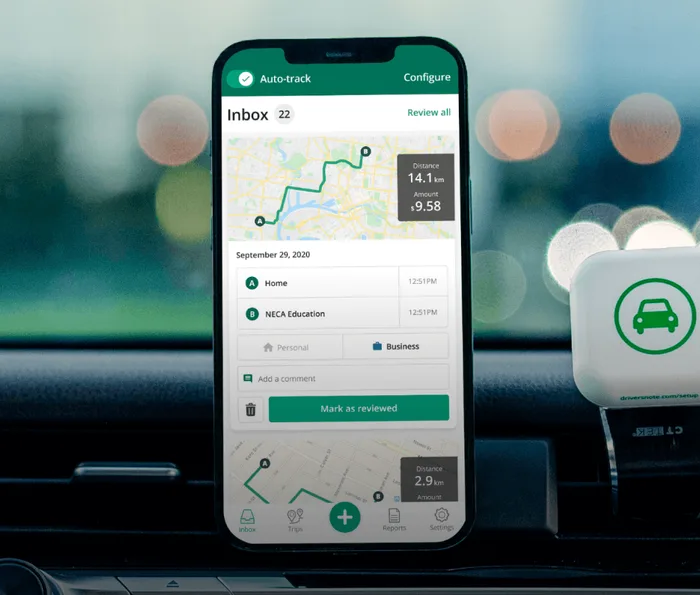
Tired of logging mileage by hand?
Effortless. IRS-compliant. Liberating.
 Auto-track trips
 Classify trips
 IRS compliant reports