Latest update: 20 March 2026 - 5 min read
Complete guide to grey fleets for UK businesses
A grey fleet is what you have when employees use their own cars for work, and it’s more common than most UK businesses realise. Those privately owned vehicles come with real legal, financial, and safety responsibilities that sit with the employer, whether or not anyone has thought to call it a fleet.
And while it might not feel like you’re running a fleet at all, it still comes with real legal, financial, and safety responsibilities – ones that are easy to miss if you’re not looking closely.
According to surveys by the British Vehicle Rental and Leasing Association (BVRLA) and Energy Saving Trust dated back to 2016, company fleets total around 1.8 million vehicles compared to the grey fleet’s estimated 10–14 million. In other words, grey fleet is the norm, not the exception.
So if your company has salespeople driving to customer meetings, consultants visiting client sites, or care and support workers travelling between appointments, chances are you’re already managing a grey fleet, whether you call it that or not.
That’s something we hear a lot when talking to customers:
“We didn’t think of it as a fleet at all — it was just people using their own cars. It was only when compliance came up that we realised how much responsibility sat with us.”
Before we can dive into managing a grey fleet properly, you need clarity. That means:
- Clear definitions
- A shared understanding of how to stay safe, compliant, and in control
- Clarity on the division of responsibilities
That’s what this guide is here to help you with.
What is a grey fleet?
A grey fleet is any vehicle used for business travel that’s owned or leased by the employee, rather than the employer. This includes:
- Privately owned cars
- Cash allowance vehicles
- Personal leased vehicles
- Employee-owned vans
- Motorcycles and scooters
- Bicycles used for business
- Electric & hybrid vehicles
Common grey fleet journeys include:
- Care workers making home visits
- Technicians or engineers carrying out field service or on-site servicing
- Salespeople travelling to customer meetings
- Consultants visiting client sites
- Construction workers travelling between sites or to temporary works locations
- Employees attending a conference

Grey fleet driver
A grey fleet driver is anyone who uses a privately owned vehicle (not owned, leased, or rented by the company) to make a work-related journey.
This includes:
- Employees taking a car allowance instead of a company car
- Staff using their cars for occasional work trips (meetings, training, errands)
- Contractors, freelancers, and gig workers driving for work
- Anyone driving a third-party vehicle (e.g. a client’s or friend’s car) for business
Grey fleet vs company cars vs commercial fleets explained
Company cars became popular in the UK after WWII, with their biggest boom in the late 1960s and 1970s. One of the UK’s favourite workplace perks, they even earned the nickname “repmobiles.”
Today, the picture is far more mixed. Most businesses use a combination of company cars, grey fleet, commercial vehicles, and short-term leases. For a full breakdown of how grey fleet compares to a company car across cost, tax, and responsibility, see our company car vs personal car comparison.
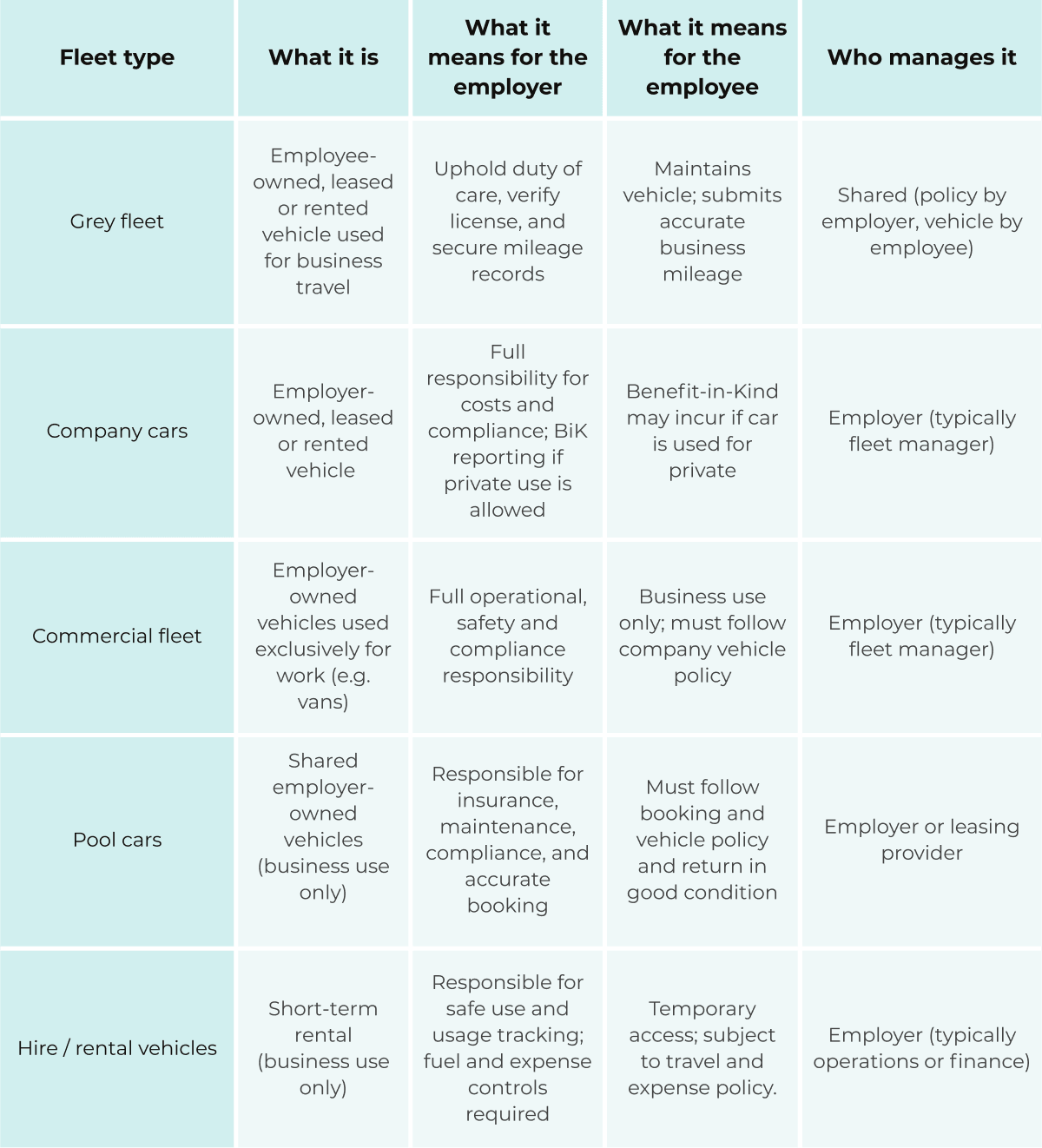
General employer fleet responsibilities
Regardless of who owns the vehicle your employee is driving, some responsibilities always sit with you as the employer:
- A duty of care for employees when they are driving for work
- Ensuring vehicles used for business are insured, roadworthy, and legally compliant
- Clear visibility into how vehicles are used for work-related travel
- Responsibility for how journeys are planned, approved, and managed
When these basics are covered, work travel is easier to manage and far less likely to catch you by surprise later on.
Grey fleet benefits
Several factors have made the grey fleet the default for many UK organisations.
Workplace flexibility has changed how employees travel. Fewer daily commutes, more hybrid roles, and less predictable schedules mean many employees prefer using their own vehicle rather than being tied to a company car. For employers, that flexibility also removes the burden of managing unused fleet assets when roles or headcount change.
Cost control is a major driver too. By relying on employees’ own vehicles, businesses free up capital and reduce spending on servicing, maintenance, insurance, and fleet administration. Employees can still be reimbursed for business travel using HMRC-approved mileage rates or employer-set custom rates.
Tax and BiK considerations have also shifted the balance. Rising Benefit-in-Kind rates have made company cars a less attractive perk for employees, nudging more people toward taking a cash allowance and using their own vehicle instead.
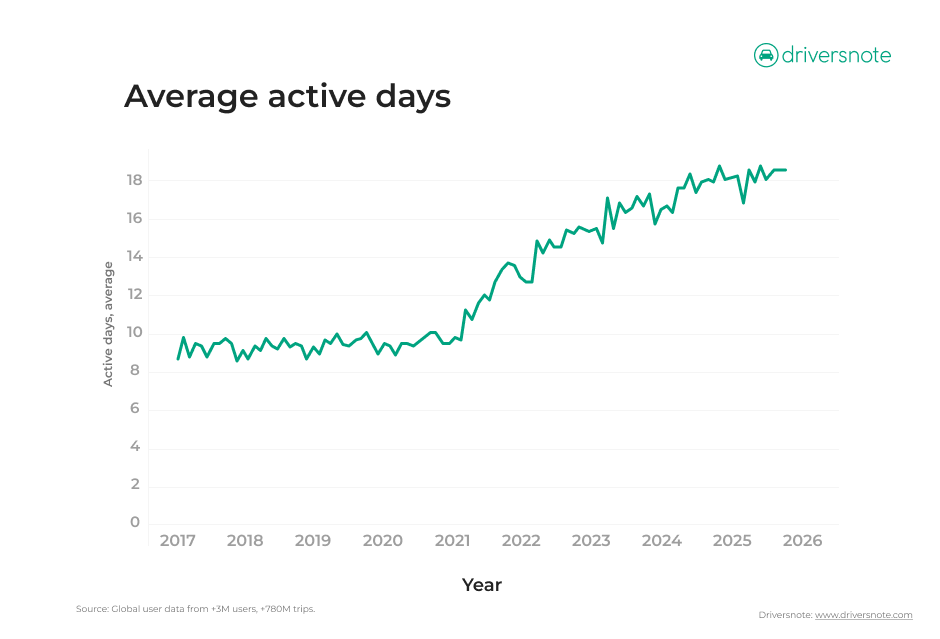
Driving patterns have changed too. Since the pandemic, many businesses travel fewer miles overall, with more meetings held online and fewer long trips. Business driving is now more occasional and fragmented, which makes a full company fleet harder to justify.
We see this reflected in Driversnote mileage tracking data. Based on millions of trips logged each month, employees are driving on more days per year, but journeys are shorter and less predictable, reflecting the realities of hybrid work.
Grey fleet management
Grey fleet management is how you, as an employer, stay in control over work-related driving your employees do in their own cars.
It’s the policies, checks, processes, and software you put in place to:
- Meet your duty of care
- Make sure vehicles used for work are safe, insured, and legally compliant
- Track business mileage and costs accurately
- Understand when, why, and how your people drive for work
For a full breakdown of what to look for, see our guide to grey fleet management software and tools.
A clear legal baseline
As a UK employer, you have a duty of care to protect your employees while they’re working, including when they’re driving for work. This applies regardless of who owns the car.
In practice, that means taking reasonable steps to ensure vehicles used for work are:
- Roadworthy and properly maintained
- Insured for business use
- MOT-tested where required
The same principles apply to journey planning, fatigue management, and basic risk assessment. Use our grey fleet risk assessment checklist to work through driver, vehicle, and journey checks in a structured way.
Cash allowance vehicles are subject to the same rules. Even if an employee buys or leases a car themselves using an allowance, it’s still classed as grey fleet, and the employer’s responsibility remains unchanged. A written grey fleet policy is the clearest way to document that responsibility and set expectations for both managers and employees.
Who actually manages a grey fleet?
Because grey fleet vehicles aren’t usually part of a “traditional” fleet, ownership inside the organisation can be unclear.
It’s not always the fleet manager, because, technically, there is no fleet. As a result, many businesses haven’t invested in systems or processes to manage it.
And grey fleet management doesn’t require a new department or a heavy admin burden.
What it does require is clear ownership. Someone in the organisation needs responsibility for:
- Setting policy or simply giving directions to employees in terms of mileage tracking, insurance, and similar
- Ensuring compliance
- Overseeing mileage and safety checks
Whether that sits with fleet, finance, HR, operations, or health and safety, clear processes and the right tools are key. If your grey fleet is growing, our grey fleet management scaling checklist walks through what typically breaks at 10, 25, and 50+ drivers and what to put in place at each stage.
How confident are you in your grey fleet setup?
If you’re still unsure about your setup, answering these basic questions can bring clarity and help you figure out your next steps:
- Do employees use their own vehicles for work?
- Are those vehicles insured for business use?
- Is business mileage tracked accurately?
- Do you have a clear grey fleet policy in place?
Assess your setup with our grey fleet risk assessment checklist.
FAQ
A grey fleet refers to employees using their own personal vehicles for business journeys instead of a company car. This can include privately owned or leased cars. Grey fleets are common in roles where driving supports the job, but isn't the employee's primary function, such as healthcare, construction, consultancy, sales, and property management.
A grey fleet driver is anyone who uses a privately owned vehicle (not owned, leased, or rented by the company) to make a work-related journey. This can include: staff visiting clients or sites, managers travelling between offices, care workers driving between service users, or consultants attending off-site meetings.
Even though grey fleet vehicles are employee-owned, employers remain responsible for tax compliance and duty of care. Employers must ensure accurate mileage records are kept if mileage is reimbursed, verify drivers have a valid licence, business-use insurance, and a valid MOT, and maintain a clear policy defining what counts as business mileage.
Grey fleet management is typically handled by the employer, even though employees use their own vehicles for work. Responsibility often sits with fleet managers, HR, finance, or operations teams. In practice, it involves tracking mileage accurately, managing reimbursements, checking drivers have valid licenses and business insurance and keeping clear records to ensure employees are paid correctly, and admin stays simple.
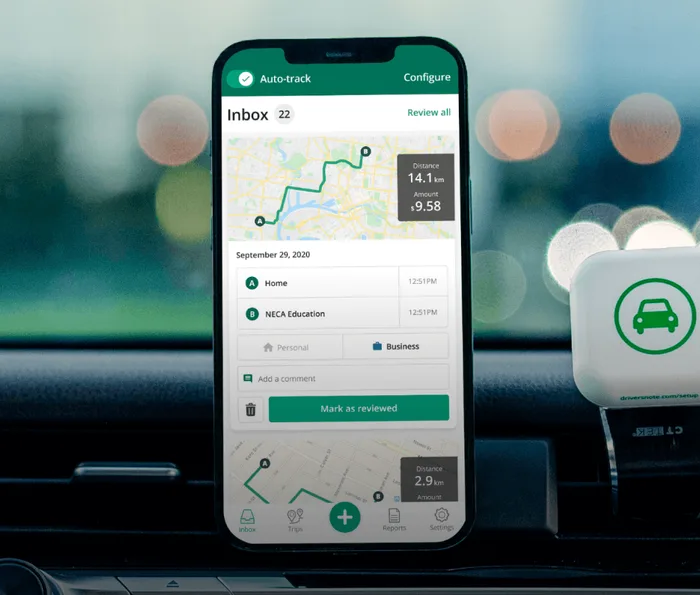
Tired of logging mileage by hand?
Effortless. IRS-compliant. Liberating.
 Auto-track trips
 Classify trips
 IRS compliant reports