Latest update: 26 May 2026 - 5 min read
Grey fleet management software and tools: How to stay compliant, organised, and in control
If your employees drive their own cars for work, you are already managing a grey fleet. The question is whether that fleet is governed by estimates and trust, or by structured records that hold up under scrutiny.
Grey fleet software helps UK organisations manage business mileage driven in employees’ personal vehicles.
Rather than tracking the vehicles themselves, it focuses on recording journeys, supporting HMRC-compliant reimbursement, and giving HR, finance, and operations teams the visibility they need, without burdening drivers or raising privacy concerns.
“People don’t want mileage tracking to feel like big brother. They’re much more comfortable when it’s clear they keep control over their journeys and what gets submitted.”
Source: Driversnote Sales and Onboarding Call Analysis, 2025
The right tool supports shared ownership across teams, including those without a dedicated fleet manager, and works equally well for personal vehicles, company cars, and hire cars.
What is grey fleet software?
Grey fleet management software gives UK organisations a structured way to track, approve, and reimburse business mileage when employees drive their own cars for work.
It replaces manual processes, such as spreadsheets and emailed claim forms, with automatic journey recording, standardised submission, and audit-ready reporting.
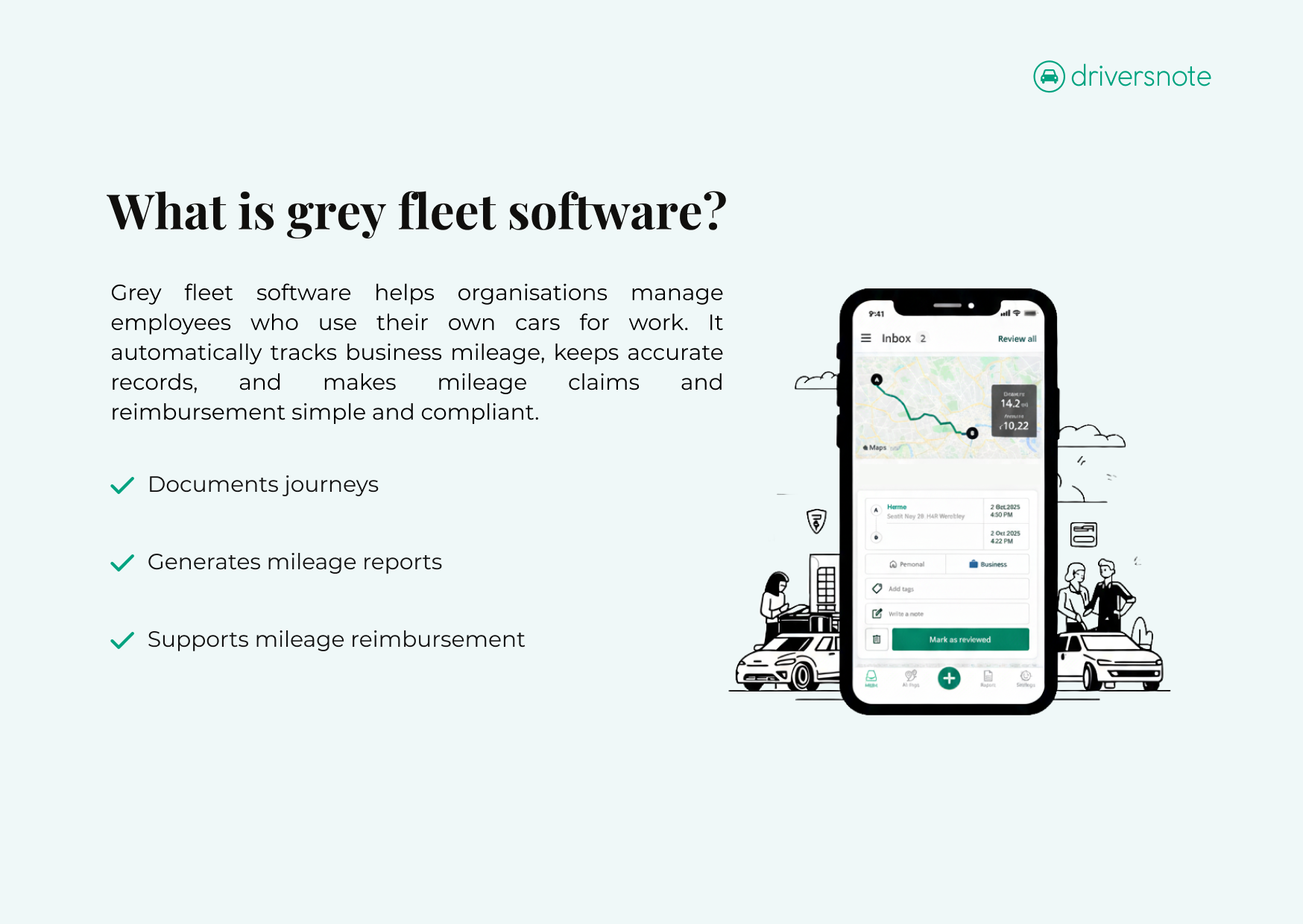
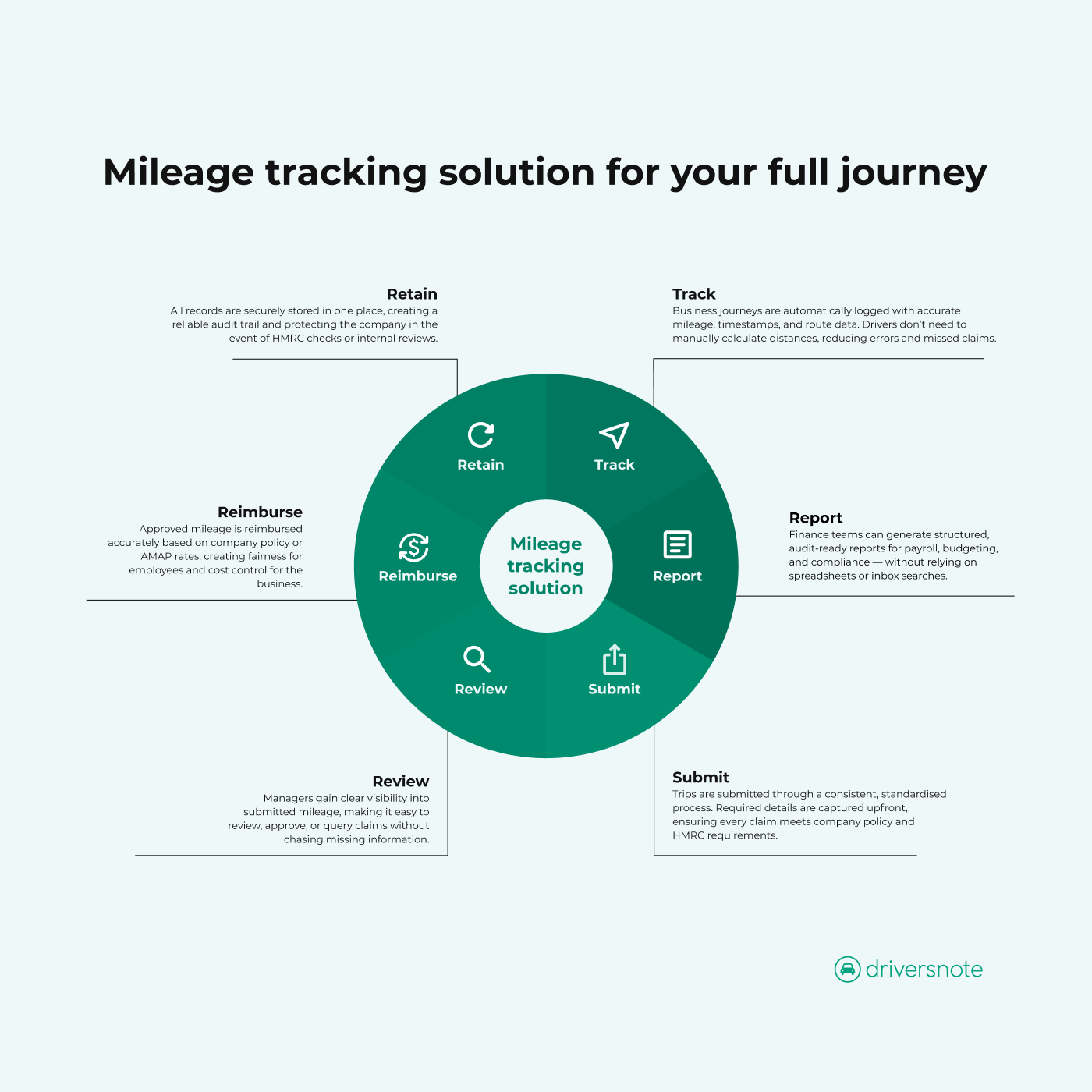
A well-designed grey fleet tool covers the full mileage workflow:
- Track - business journeys are automatically logged with accurate mileage, timestamps, and route data
- Submit - drivers submit trips through a consistent process that captures all required details upfront
- Review - managers see submitted business journeys clearly, without chasing missing information
- Reimburse - approved mileage is paid at company policy rates or HMRC Approved Mileage Allowance Payment (AMAP) rates of 55p per mile for the first 10,000 miles, then 25p
- Report - finance teams generate structured, audit-ready records for payroll and compliance
- Retain - all records are stored securely, creating a reliable audit trail for HMRC checks
The right tools should support the often-shared ownership across HR, finance, health & safety, and operations, including teams without a dedicated fleet manager or those managing both personal vehicles and company cars.
Why spreadsheets stop working
Spreadsheets are a reasonable starting point. They help you understand what data drivers need to submit and sketch out a basic process. But they do not scale.
As soon as you have more drivers, more journeys, and more people involved in approvals, errors multiply, versions diverge, and compliance risk increases. Grey fleet management needs more structure than a shared file can reliably provide.
Why grey fleet tools are different from traditional fleet systems
Traditional fleet management systems are built for company-owned vehicles and centralised control. They rely on installed telematics hardware, detailed vehicle oversight, and dedicated fleet teams.
Grey fleet software needs to do the opposite.
Because employees are driving their own cars, you cannot install tracking devices or treat their vehicles as company assets. At the same time, the business still needs accurate mileage data to stay compliant, control costs, and avoid overpaying claims.
In most organisations, grey fleet responsibility is shared rather than centralised:
- HR handles policy and employee communication
- Finance manages reimbursement and expenses
- Health & Safety oversees the duty of care
- Operations focuses on travel efficiency and productivity
- Team managers check routes and journeys for the first approval
A grey fleet solution must work for all of these stakeholders, not just a dedicated fleet manager. That means lightweight administration, clear approval workflows, and reporting that finance can use without needing specialist fleet knowledge.

What to look for in grey fleet software
Privacy and UK GDPR
Privacy is the most common concern when introducing mileage tracking for personal vehicles. Employees are understandably uncomfortable with GPS-style monitoring designed for company cars.
Good grey fleet software respects that boundary. Drivers should control their own journey data, choose which trips to submit, and keep private travel private. Managers should only see business journeys that have been actively reported, not a full movement history.
From a compliance standpoint, the system must also align with UK GDPR: storing data securely, limiting access appropriately, and following privacy-by-design principles.
That means organisations get the audit-ready records they need without collecting unnecessary personal data.
HMRC compliance and record-keeping
Mileage reimbursements are only tax-free when they are supported by proper records. HMRC requires that mileage logs include:
- The date of each journey
- Start and end locations
- Business purpose of the trip
- Total miles driven
Without consistent records, reimbursements can be difficult to justify during an HMRC audit, and in some cases may be reclassified as taxable pay. Grey fleet software that produces standardised, contemporaneous logs removes that risk.
Accuracy matters as much as compliance. Most mileage errors are not deliberate. Self-reported distances are easy to overstate, even unintentionally.
Automatic tracking via iBeacon or GPS captures the actual journey, while manually added trips are flagged clearly and shown on a map.
This makes it straightforward to verify routes, auto-approve clean claims, and escalate only the ones that need a second look, rather than reviewing every submission manually. The result is less admin for managers and fewer disputes for drivers.
Scalability and mixed fleet support
Your fleet will change. As your organisation grows, you may add company cars, pool cars, or hire vehicles alongside personal vehicles. The right grey fleet software should handle all of them in one place, without forcing separate systems for different ownership types.
For short-term hire cars, standard mileage rates may not apply, but tracking still matters. Mileage logs help verify fuel claims, enforce travel policy, and demonstrate business use, reducing tax and compliance risk.
With Driversnote Teams, you can manage multiple teams under one company account, set different mileage rates and rules per team, assign managers, and centralise billing, all without adding administrative complexity.
How to scale your grey fleet: What breaks at 10, 25 and 50+ drivers
In short: What to look for in grey fleet mileage software?
Grey fleet management does not require an enterprise fleet platform. It requires the right fundamentals, applied consistently across your organisation.
A capable grey fleet tool should deliver:
- HMRC-compliant mileage logs with accurate, automated distance tracking
- Clear separation of business and private use
- Driver control over journey data, with privacy-by-design built in
- Support for mixed fleets, including personal vehicles, company cars, and hire cars
- Centralised reporting and audit trails accessible to HR, finance, and operations
- Lightweight administration that works without a dedicated fleet manager
- Automatic verification of claimed routes, with exceptions flagged for review rather than every trip reviewed manually
Done well, grey fleet mileage tracking is not just an admin process. It is a compliance layer that reduces financial leakage, protects the business in an audit, and gives everyone involved, drivers and managers alike, confidence that the numbers are right.
Ready to simplify mileage across your organisation? Get started with Driversnote Teams to eliminate manual logs, improve visibility, and generate HMRC-compliant reports company-wide.
FAQ
Good grey fleet mileage software allows employees to keep control of their data. Managers should only see business journeys that are submitted for reimbursement, ensuring privacy and UK GDPR compliance.
Grey fleet management software helps UK organisations track, document, and reimburse business mileage when employees use their own vehicles for work. It ensures HMRC-compliant mileage logs while supporting duty of care and reimbursement accuracy.
Yes. Many UK organisations operate mixed fleets (personal vehicles, company cars, pool cars, rentals). The right grey fleet management software should support all vehicle types within one system.
The HMRC Approved Mileage Allowance Payment (AMAP) rate for cars and vans is 55p per mile for the first 10,000 business miles in a tax year, then 25p per mile after that. Payments up to these rates are tax-free. Payments above them are subject to tax and National Insurance.
HMRC requires mileage logs to include the date of each journey, start and end locations, the business purpose, and total miles driven. Records must be contemporaneous (recorded at the time, not reconstructed later). Grey fleet software that captures this data automatically reduces the risk of non-compliant records.
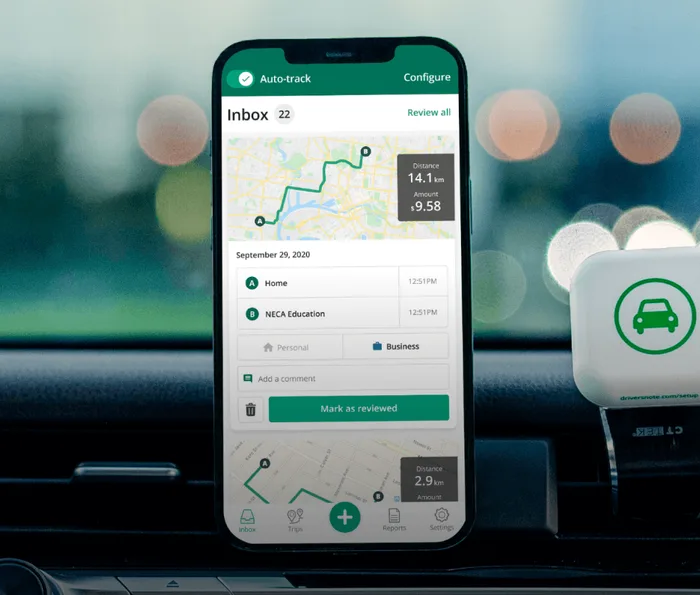
Tired of logging mileage by hand?
Effortless. IRS-compliant. Liberating.
 Auto-track trips
 Classify trips
 IRS compliant reports